
What to do when a salon client cancels at the last minute
A client cancels just before their visit. Use a calm response, check the payment situation, and make a practical plan for the opening and the next booking.
Desk Team
6 min read
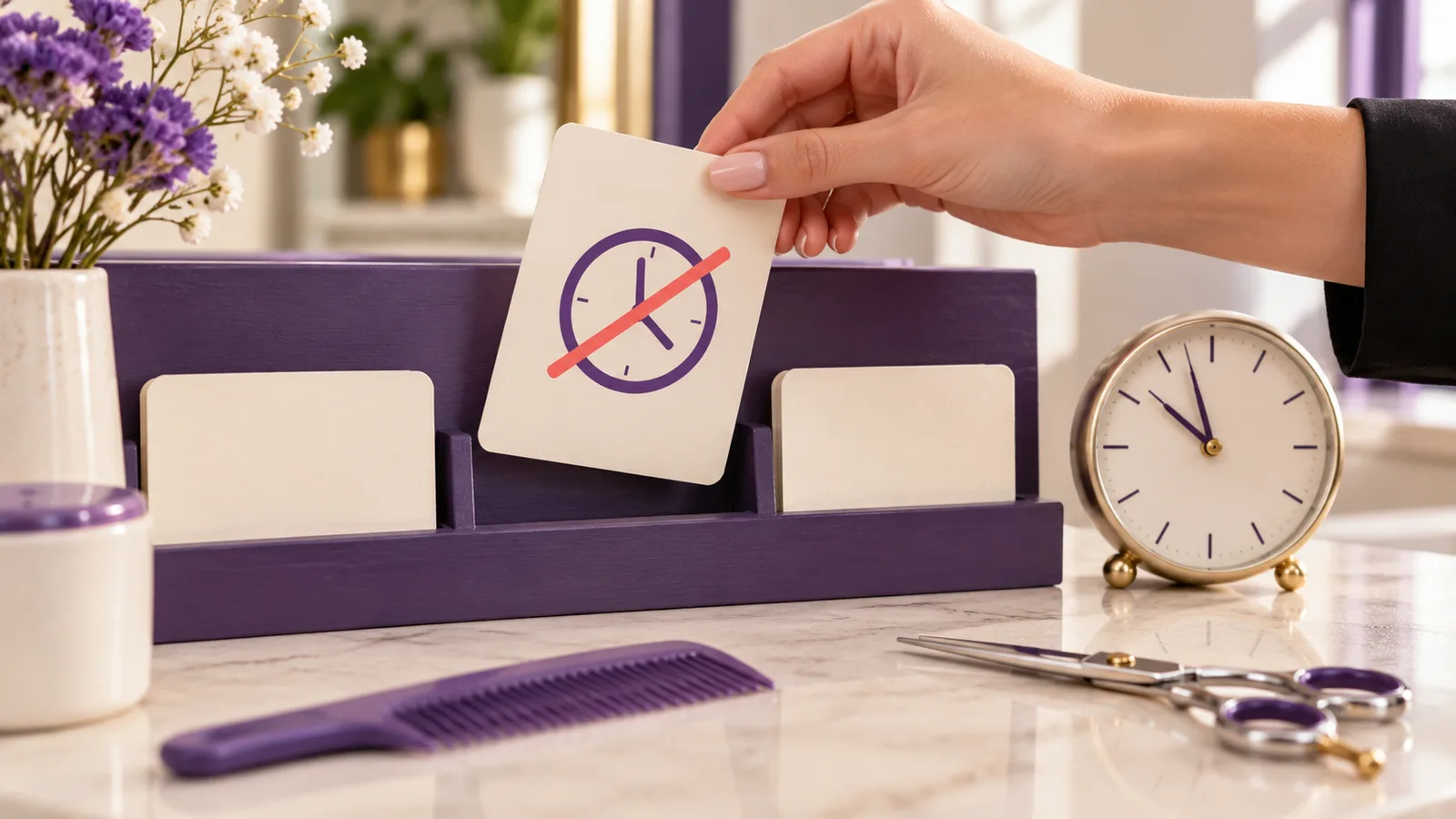
You have set aside time for a color service, a nail appointment, or a treatment. Then the message arrives: “Sorry, I can't make it today.” The next client is still hours away, and you are left deciding what to say while looking at an opening you did not expect.
Start by confirming exactly what is changing. Check any payment and the terms already agreed, update your schedule, and decide whether the remaining time can realistically take another client. If late cancellations keep happening, discuss the conditions for a future booking before reserving more time.
That gives you a way to respond without writing an angry message or promising a refund before you have checked the details.
Acknowledge the cancellation and settle the next step
If the message clearly cancels the appointment, acknowledge the specific date and time. If the client only says they might be late or need a change, ask whether they are cancelling or requesting a different time. Do not reserve a replacement appointment based on an assumption.
Here is wording to adapt when the client has definitely cancelled:
“Thanks for letting me know. I'll cancel your [service] appointment on [full date] at [time]. Would you like to look at another date? I'll check the payment details and the terms we agreed, then confirm anything that applies.”
Only include the payment sentence if there is something to check. A client who has paid nothing does not need a confusing message about a refund.
You can be considerate without treating every explanation as something to investigate. If illness or an emergency is involved, avoid pressuring the person to attend. Explain the next step calmly and keep private details out of any public availability post.
Check the money separately from the calendar
Before discussing a charge or refund, look at what the client actually paid and which policy they received and acknowledged. Check whether it distinguishes a cancellation, a late change, and a missed appointment. A deposit and a cancellation fee are different arrangements; do not assume one automatically becomes the other.
For fees, check applicable requirements and any required payment authorization. A saved card is not a reason to invent a new charge. If you did not establish a fee in advance, do not announce one for the first time in your reply. Square's policy guidance also emphasizes advance disclosure, authorization, and requirements that vary by location.
If you make an exception, tell the client what you are doing and record the decision. For example: “I'm waiving the late-cancellation charge for this appointment. For future visits, the cancellation terms will still apply.” Use that wording only when such a charge was already agreed and is appropriate to apply.
You do not need to resolve a disagreement by text while another client waits. Confirm that you have received the cancellation, check the records, and give a realistic time for your follow-up.
This is general business information, not legal advice. Have fee and refund terms reviewed for your location and payment setup before relying on them.
Decide what the opening can actually accommodate
Once the cancellation is clear, update the schedule so nobody on your team still expects the client. Keep a cancellation distinct from a no-show: this client has contacted you.
Then check the usable time, provider, room or chair, preparation, and cleanup. A cancelled long service does not mean you can fit that same service if much of the original window has already passed.
| Situation now | A practical next step |
|---|---|
| Another client asked to hear about an earlier opening | Check that their requested service fits, then offer the actual time through the contact route they requested |
| You can still take a complete appointment | Publish accurate availability on your business page, with the service, full date, time, and a clear booking route |
| Too little time remains for suitable work | Use the gap for preparation, stock checks, or administration instead of rushing a service |
A public availability post is different from a promotional text to your client list. Do not turn one cancellation into an unsolicited bulk message.
Before confirming a replacement, check the calendar again and agree on the service and time. If an existing client moves into the opening, check what happens to their old appointment too. Moving work from another day can leave a different gap; it is not automatically an additional visit.
Address repeated late changes before booking again
One cancelled appointment does not tell you why a person will cancel in the future. If there is a repeated pattern, use the actual booking history rather than a label such as “unreliable client.”
Talk about what you can offer next. A client whose work schedule changes frequently may find it easier to commit if they book closer to the visit date. That option still depends on your availability; it is not a promise to hold a popular time open.
You could say:
“We've had several changes close to your appointment time. Those openings are difficult for me to refill. Before we reserve another visit, let's check which booking arrangement you can manage and review the cancellation terms together.”
Explain any new conditions before the next booking, including when they start. Give the client a chance to decide whether those conditions work for them. Keep the same approach across your team, with a clear way to record exceptions.
For prevention rather than today's response, our guide to reminders, deposits, and no-shows covers those options. Check that any deposit tool's refund behavior matches the policy you intend to use.
Keep the appointment and the conversation in order with Desk
When the change lives in a message thread but the appointment still looks active in your diary, it is easy to leave someone working from old information. Desk gives you a calendar and client records in one place. You can mark the appointment Canceled and use notes to record when the client contacted you, what you agreed, and whether a new visit was arranged.
Client notes and appointment history give you context when that person books again. Keep entries factual and dated yourself; the useful record is “cancelled on [date/time], agreed [next step],” rather than a judgment about the person. Desk's appointment guide explains the separate cancellation and no-show actions.
If you use deposits, there is an important payment detail: deposits are a Desk Pro feature. Cancelling an appointment with a paid deposit refunds that deposit to the client. That behavior does not implement a policy of automatically keeping a late-cancellation deposit. Review the deposit details before choosing your setup. Keep the appointment status accurate.
You can start with organizing the schedule and client records. Desk Free includes unlimited appointments and clients, client records, history and notes, and one team member for one business, without a subscription. SMS credits and payment processing are charged separately. The plan comparison shows the Free and Pro scope.
Leave a clear record before the day ends
For the cancelled appointment, record the original service and time, when notice arrived, the agreed payment outcome, and the next booking decision. Keep only the detail needed for the work; a private account of the client's emergency is not necessary.
Check that the calendar matches what you told the client and that any promised payment follow-up is complete or still assigned to someone. If the opening was filled, distinguish the replacement booking from a completed visit and note whether it moved work from elsewhere.
Next time a cancellation arrives, you should be able to answer three questions: Is the schedule accurate? Does the client know the next step? Have we handled the payment question according to what was agreed? Those checks give you a consistent response even when the appointment cannot be replaced.